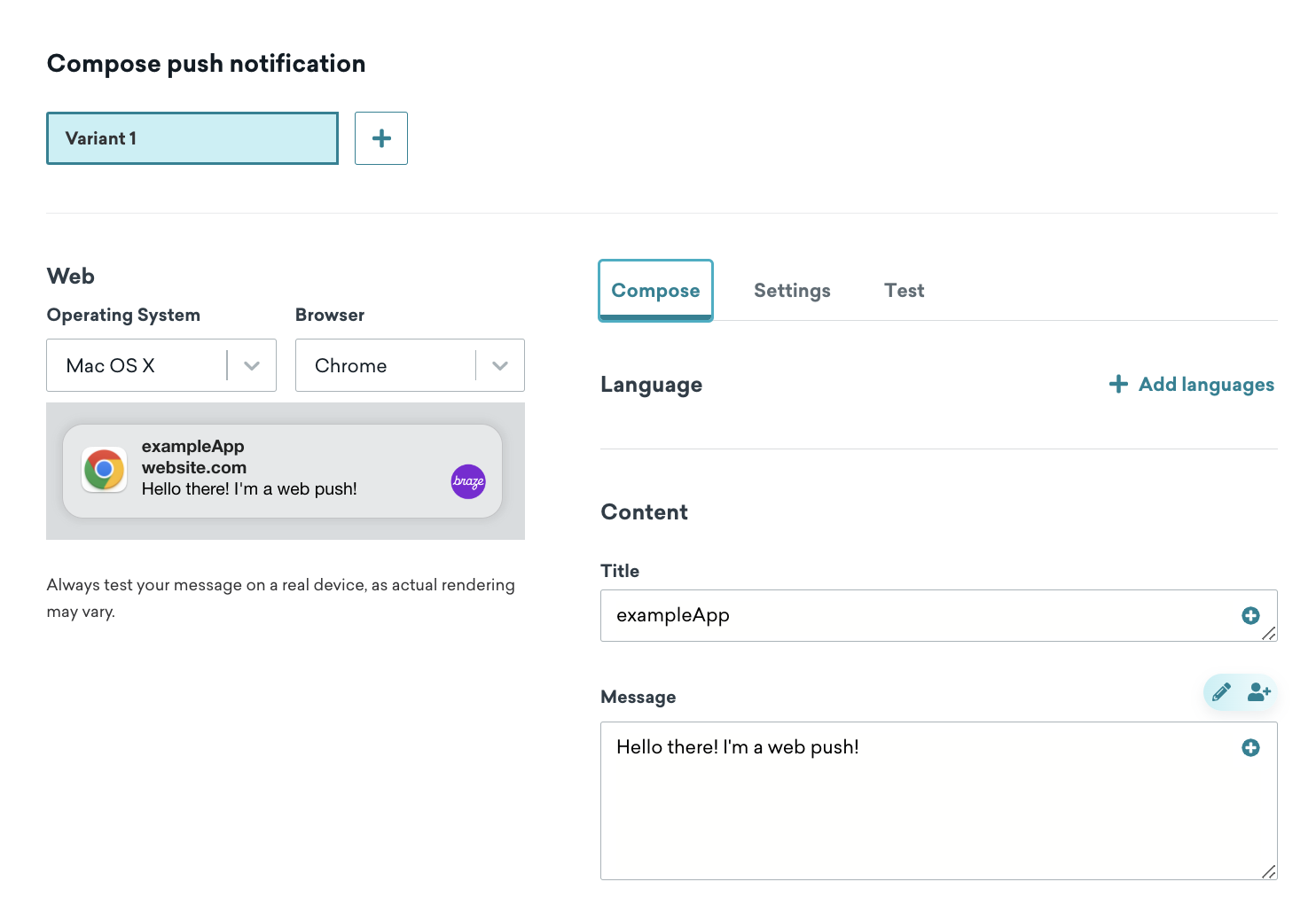
Web Push Generate Keys Terminal
To sign an assembly with a strong name, you must have a public/private key pair. This public and private cryptographic key pair is used during compilation to create a strong-named assembly. You can create a key pair using the Strong Name tool (Sn.exe). Key pair files usually have an .snk extension.
When you generate the keys, you will use ssh-keygen to store the keys in a safe location so you can bypass the login prompt when connecting to your instances. To generate SSH keys in macOS, follow these steps: Enter the following command in the Terminal window. Ssh-keygen -t rsa. This starts the key generation process. Dec 03, 2018 There are a couple of ways to generate these keys, you can visit this site web-push-codelab.glitch.me to generate these keys or install web-push cli with npm to generate them from your command line. SSH keys are a way to identify trusted computers, without involving passwords. The steps below will walk you through generating an SSH key and adding the public key to the server. Step 1: Check for SSH Keys First, check for existing SSH keys on your computer. Open Git Bash, Cygwin, or Terminal, etc. You can create and configure an RSA key with the following command, substituting if desired for the minimum recommended key size of 2048: ssh-keygen -t rsa -b 2048 -C 'email@example.com' The -C flag, with a quoted comment such as an email address, is an optional way to label your SSH keys. To enable Push Notification for your iOS app, you will need to create and upload the Apple Push Notification Certificate (.pem file) to us so we will be able to connect to Apple Push. 30 rows ZPF13-ZPF24 contain settings for the primary keys (for 12-key terminals: physical. Again, you could use any command (not just push) with this alias. You could even do git admin clone. To clone a repository that you would only have access to using your 'admin' key. Step 1: Create the alternative SSH keys, optionally set a passphrase in case.
Note Generate new encryption key pivpn.
In Visual Studio, the C# and Visual Basic project property pages include a Signing tab that enables you to select existing key files or to generate new key files without using Sn.exe. In Visual C++, you can specify the location of an existing key file in the Advanced property page in the Linker section of the Configuration Properties section of the Property Pages window. The use of the AssemblyKeyFileAttribute attribute to identify key file pairs was made obsolete beginning with Visual Studio 2005.
Create a key pair
To create a key pair, at a command prompt, type the following command:
sn –k <file name>
Web Push Generate Keys Terminal 5
In this command, file name is the name of the output file containing the key pair.
The following example creates a key pair called sgKey.snk.
If you intend to delay sign an assembly and you control the whole key pair (which is unlikely outside test scenarios), you can use the following commands to generate a key pair and then extract the public key from it into a separate file. First, create the key pair:
Next, extract the public key from the key pair and copy it to a separate file:
Once you create the key pair, you must put the file where the strong name signing tools can find it.
When signing an assembly with a strong name, the Assembly Linker (Al.exe) looks for the key file relative to the current directory and to the output directory. When using command-line compilers, you can simply copy the key to the current directory containing your code modules.
If you are using an earlier version of Visual Studio that does not have a Signing tab in the project properties, the recommended key file location is the project directory with the file attribute specified as follows:

Web Push Generate Keys Terminal 2