Generate A Private Key File
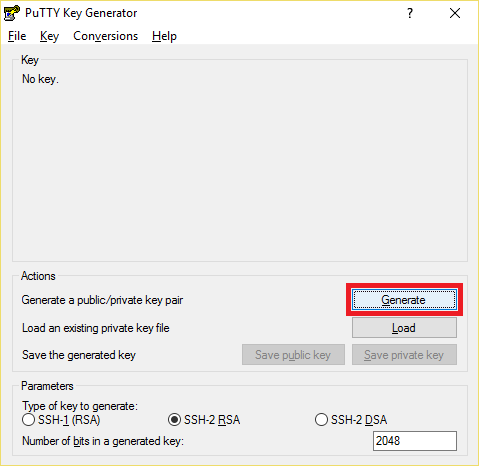
The PuTTYgen program is part of PuTTY, an open source networking client for the Windows platform.
Select the private key that you wish to backup. Right click on the file and choose All Tasks Export 9. The certificate export wizard will start, please click Next to continue. In the next window select Yes, export the private key and click Next 10.
Get Certificate Private Key
See Example: SSL Certificate - Generate a Key and CSR. Tableau Server uses Apache, which includes OpenSSL. You can use the OpenSSL toolkit to generate a key file and Certificate Signing Request (CSR) which can then be used to obtain a signed SSL certificate. Steps to generate a key and CSR. Sep 11, 2018 If that is the case, then the private key is accessible to the server and is most likely somewhere on the server. The logical step would be to search for a.key file. In some cases, OpenSSL stores the.key file to the same directory from where the. Crt and key files represent both parts of a certificate, key being the private key to the certificate and crt being the signed certificate. It's only one of the ways to generate certs, another way would be having both inside a pem file or another in a p12 container. A certificate.crt and privateKey.key can be extracted from your Personal Information Exchange file (certificate.pfx) using OpenSSL. Follow this article to create a certificate.crt and privateKey.key files from a certificate.pfx file. How to Locate Your Private Key. Your private key file’s location will be referenced in the main Apache configuration file, which is httpd.conf or apache2.conf. You will be able to find the private key’s location in your site’s virtual hosts file. Navigate to the server block. (This may cause a password prompt every time an application attempts to access the private key or it may cause IIS to fail). Click Next; Enter and confirm a password to protect the PFX file.
Generate Private Key File From Certificate
- Download and install PuTTY or PuTTYgen.
To download PuTTY or PuTTYgen, go to http://www.putty.org/ and click the You can download PuTTY here link. https://everhigh604.weebly.com/blog/original-backyard-baseball-download-mac.
- Run the PuTTYgen program.
- Set the Type of key to generate option to SSH-2 RSA.
- In the Number of bits in a generated key box, enter 2048.
- Click Generate to generate a public/private key pair.
As the key is being generated, move the mouse around the blank area as directed.
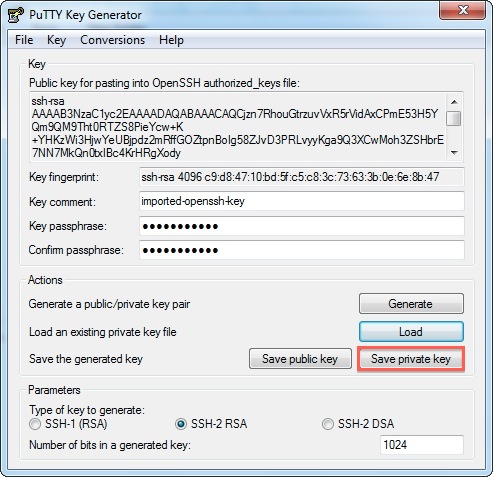
- (Optional) Enter a passphrase for the private key in the Key passphrase box and reenter it in the Confirm passphrase box.
Note:
While a passphrase is not required, you should specify one as a security measure to protect the private key from unauthorized use. When you specify a passphrase, a user must enter the passphrase every time the private key is used.
- Click Save private key to save the private key to a file. To adhere to file-naming conventions, you should give the private key file an extension of
.ppk(PuTTY private key).Note:
The.ppkfile extension indicates that the private key is in PuTTY's proprietary format. You must use a key of this format when using PuTTY as your SSH client. It cannot be used with other SSH client tools. Refer to the PuTTY documentation to convert a private key in this format to a different format. - Select all of the characters in the Public key for pasting into OpenSSH authorized_keys file box.
Make sure you select all the characters, not just the ones you can see in the narrow window. If a scroll bar is next to the characters, you aren't seeing all the characters.
- Right-click somewhere in the selected text and select Copy from the menu.
- Open a text editor and paste the characters, just as you copied them. Start at the first character in the text editor, and do not insert any line breaks.
- Save the text file in the same folder where you saved the private key, using the
.pubextension to indicate that the file contains a public key. - If you or others are going to use an SSH client that requires the OpenSSH format for private keys (such as the
sshutility on Linux), export the private key:- On the Conversions menu, choose Export OpenSSH key.
- Save the private key in OpenSSH format in the same folder where you saved the private key in
.ppkformat, using an extension such as.opensshto indicate the file's content.